The Modernist Journals Project, a joint undertaking of Brown University and the University of Tulsa, holds the complete run of Camera Work, the photographic quarterly Alfred Stieglitz edited and published in New York from January 1903 to June 1917. Every page is scanned and free to read.
The index lists fifty items: forty-seven regular issues covering numbers 1 through 50, since 34/35, 42/43, and 49/50 each ran as doubles, plus three supplementary numbers, among them the 1912 Special Number on Matisse, Picasso, and Gertrude Stein. The scans came from Princeton University Library's copies, and the project names what is missing — six plates torn out of the Princeton volumes and unavailable in reprint, including Gertrude Käsebier's "Portrait (Miss N)" from No. 1 and Steichen's portrait of Bernard Shaw from No. 42-43.
Each issue opens in a page viewer — as a book, as thumbnails, or as one scrolling strip — beside a contents list keyed to page numbers, and downloads as PDF, METS, MODS, or TEI. The contents run plate by plate: "Telegraph Poles. Plate II (Strand, Paul): 27-27." The advertisements were scanned as well and paginated separately, twenty pages of them in No. 1.
The working material is the surprise. No. 1 carries Käsebier's plates, Stieglitz's "An Apology," and Steichen's "Ye Fakers," and then, toward the back, "Effective Lighting in Bird-Photography," a note on the Kodak Developing-Machine, and a paragraph on acetone-sulphite. Art argument and darkroom chemistry sit in the same eighty-eight pages.
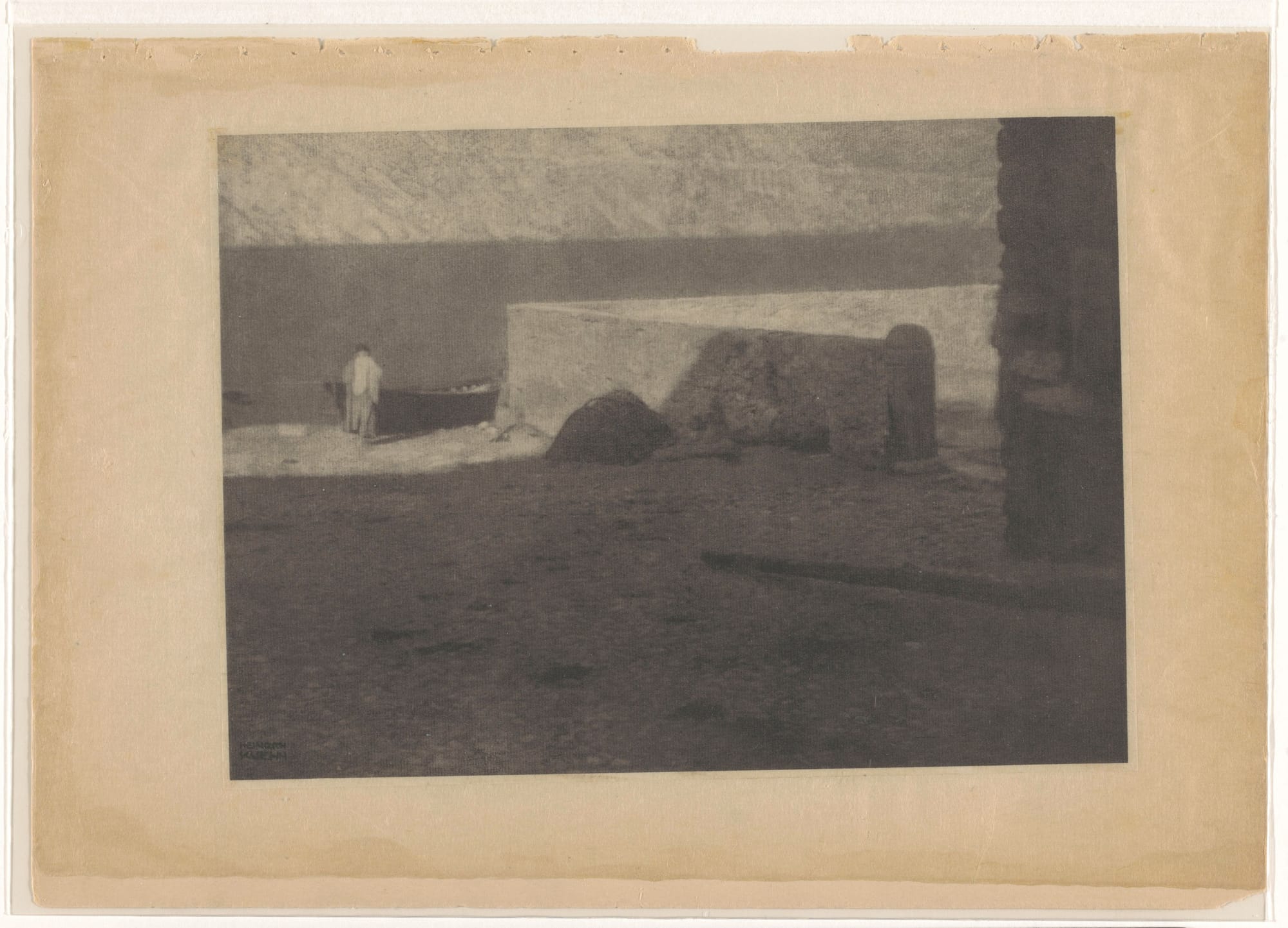
One thing the scans cannot return is the printing. Camera Work's plates were photogravures pulled under Stieglitz's supervision and tipped in by hand — except in the final double issue, where Paul Strand's eleven gravures were printed directly onto the journal page. On screen you are looking at a scan of a page.
The contents are public domain in the United States and the project claims no copyright in them, though it asks that anyone reproducing its own scans in a publication or on a website request permission first. The run begins at the Camera Work index.
GP