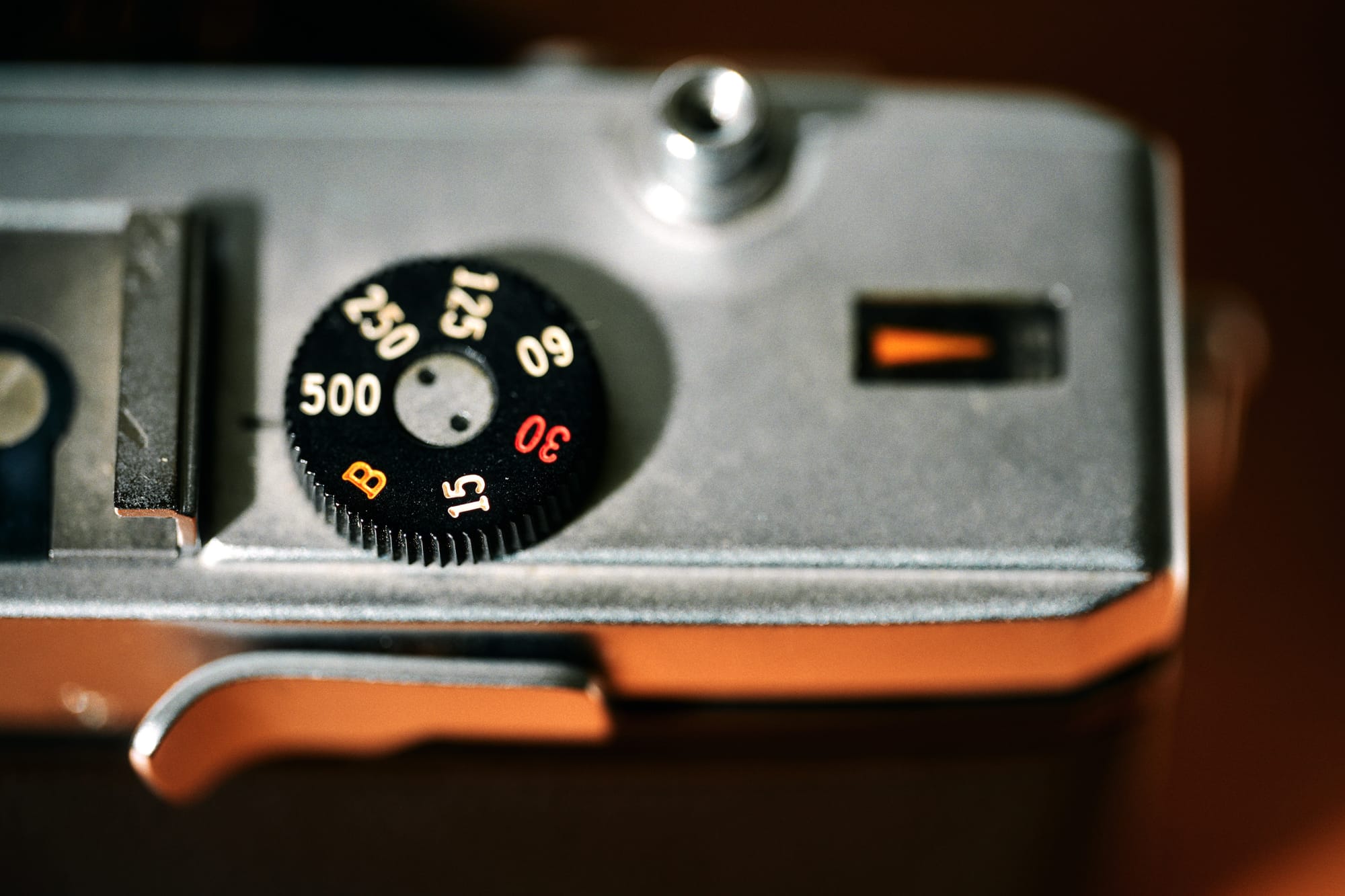
Phase One, which acquired Mamiya in 2015, designated Precision Camera Works, in Lakeway, Texas, as the official source for Mamiya's legacy film cameras "upon their purchase of Mamiya," as Bob Watkins put it, and the shop "purchased most of what was left" of the parts. Watkins wrote in an email that "it is a very rare occasion that we receive a Mamiya 6, 7, or 7II that we are unable to repair to factory standards." But in the same answer he also wrote, "we are running low on some electronic parts."
Those two sentences contain the problem that cause worry for film photographers. No major manufacturer still makes a medium-format film camera. Fujifilm discontinued its GF670 folding rangefinder in 2014; the new medium-format cameras that exist come from small makers in small numbers, some of them still at the crowdfunding stage. In 35mm the picture is similar. Nikon stopped making the F6, the last film SLR still in production, in 2020. Leica still builds film cameras by hand and their price tag reflects this dedication. Meanwhile Ricoh's Pentax 17, released in 2024, was in the company's words its "first new film camera in more than 15 years," but Ricoh has not committed to a future model. Film photography runs, for the most part, on cameras built during the before-times, and every one of them is getting older.
Mechanical camera woes
The possibility of repair is today less of a convenience for the owner of a film camera than a requirement. And the medium's future depends on it. If the cameras already in photographers' hands cannot be kept working, no supply of film will keep the medium going. The practical question (if something breaks, can it still be repaired?) has an answer that divides into two categories. Mechanical cameras, the reasoning goes, can always be put right by someone with the skill; an electronic one is waiting for a failed circuit that nobody can replace.
Aidan Bell, the manager of Nippon Photo Clinic in New York, does not dismiss the first half of that. "It certainly becomes more likely to be repaired off the bat when a camera is fully mechanical compared to electronic," he wrote. "We can typically find a way to modify via good, used parts or modification." But he also qualified this by saying that mechanical cameras can become impossible to repair for want of a part "more often than you'd think." Sometimes the part is basic and unexotic. "For a smaller example, like a missing rewind crank, we have turned customers away simply because we do not have a replacement for them."
Sometimes it is the heart of the camera. Bell's example was a Nikon F2 that will not fire because one of its shutter curtain blades "is torn and jamming the unit." Nippon would find the fault on inspection, he wrote, "but, would likely end up refusing the repair due to a lack of shutter blade replacements or full shutter unit replacements." Despite being a fully mechanical camera, nothing about the F2's construction helps once the part it needs no longer exists. Bell called it "a good example of a mechanical part that can make repair impossible regardless of it being electronic or not."
Electronics and their dilemma
Nippon's specialty is Contax, and the Contax cameras show the reverse case. Their proprietary main circuits are the kind of work owners fear, and at Nippon they are routine. "We routinely overhaul/modify Main Circuits in T2/T3s and G1/G2s and other cameras," Bell wrote. "To the average eye, this type of work can be very intimidating. That being said, this work is definitely not easy. Our technicians have been working on these cameras for 35+ years, some being factory certified."
Some of what stops a Contax G2 from working has nothing to do with its circuits. Among the failures the shop sees more commonly, Bell wrote, is the stripping of the G2's shutter-charging gear: "The camera otherwise acts normal; but, tension to fire the shutter will be unable to be created, rendering it inoperable." In such a scenario we are confronted with the unusual combination of an electronically controlled camera disabled by a mechanical gear.
What a shop can bring to a failure
Regardless of whether a camera is electronic or mechanical, the finite supply of parts to service them is a continuing challenge. Of the manufacturers, Bob Watkins wrote: "There are no new parts available for any of the brands I work, with the exception of ARCA-SWISS, for which Precision Camera Works has been the sole authorized warranty repair station for over 3 decades." Watkins then stressed that, "However, I still have a fairly extensive stock of new parts for Hasselblad, Mamiya, and the other brands that I specialize in repairing."
At Precision, that stock is part of what keeps the Mamiya 6 and 7 serviceable. Their electronics are proprietary, and of those Watkins wrote: "proprietary circuit boards and most components are irreplaceable." Where a board fails, Precision "can sometimes swap out components or sections of circuit board assemblies with good used parts." The rest comes from the Mamiya stock Precision bought. Watkins added that, "Similar scenarios hold true for many of the other brands that we still service."
Nippon's supply is other cameras. Asked how important donor cameras and used parts are, Bell answered in one word: "Very!" He continued: "We can always harvest most lost parts like the battery cap, rewind crank, back door. Or, sometimes, we're able to harvest parts like the aforementioned shutter unit and/or blades." The shutter unit whose absence ends an F2 repair is, sometimes, the part a donor body can supply.
The Widelux shows all of these working at once on a fully mechanical camera. Precision was, in Watkins's words, "the sole warranty service center in the US for many years" before Widelux closed, and "consequently, we maintained a large stock of parts." Today, he wrote, "We rely on a combination of that original parts stock, used parts, and the parts that we manufacture in house." For the Widelux and the Noblex, Precision makes some replacement parts itself, "in our modest machine shop." The Widelux has no circuits to fail, and it still depends on where its parts come from.
When repair stops making sense
A repair that can be done is not always one worth doing. Watkins's first test is not technical at all. "The first factor is the value of a good used example of the item available through eBay or through used camera dealers," he wrote. "If the repair cost exceeds the value of the item I will inform the customer that I deem it uneconomical to repair. Occasionally there's sentimental value attached to the camera or lens and the customer asks me to provide an estimate anyway."
Bell described the same arithmetic from the Contax bench. Electronic cameras "that require an excessive amount of parts are typically better to replace than repair because of the amount of work needed and how finicky they can be."
Some damage places the repair beyond any hope of resurrection. Watkins wrote that he will "typically decline to even provide an estimate for a camera if it has suffered serious water or impact damage." At Nippon, repairs are refused outright "due to a clear need for a replacement part we do not have or for serious corrosion/rust/moisture damage." Here Bell made no distinction between kinds of camera: "In both electronic and mechanical cameras, moisture can severely disrupt function."
What the future rests on
In our interviews with both shops the answer to the practical question, "can it be repaired" is not cut and dried. It depends. A broken camera can be repaired when its particular failure can be remedied with a part — new old stock, a donor body, a used spare, or a part made in a machine shop — and replaced by a technician with the experience to fit it, at a cost below that of a good used replacement.
Those conditions are what film photography's future rests on. Some parts stocks shrink as they are used. Precision is running low on some Mamiya electronics, and a shutter unit harvested from a donor is a one-time affair. Others have expanding capacity into the future, such as Precision's machine shop making Widelux parts.
At Nippon, part of the supply that keeps cameras working is cameras that no longer do. "We will always accept donations of broken cameras that we service," Bell wrote.
GP