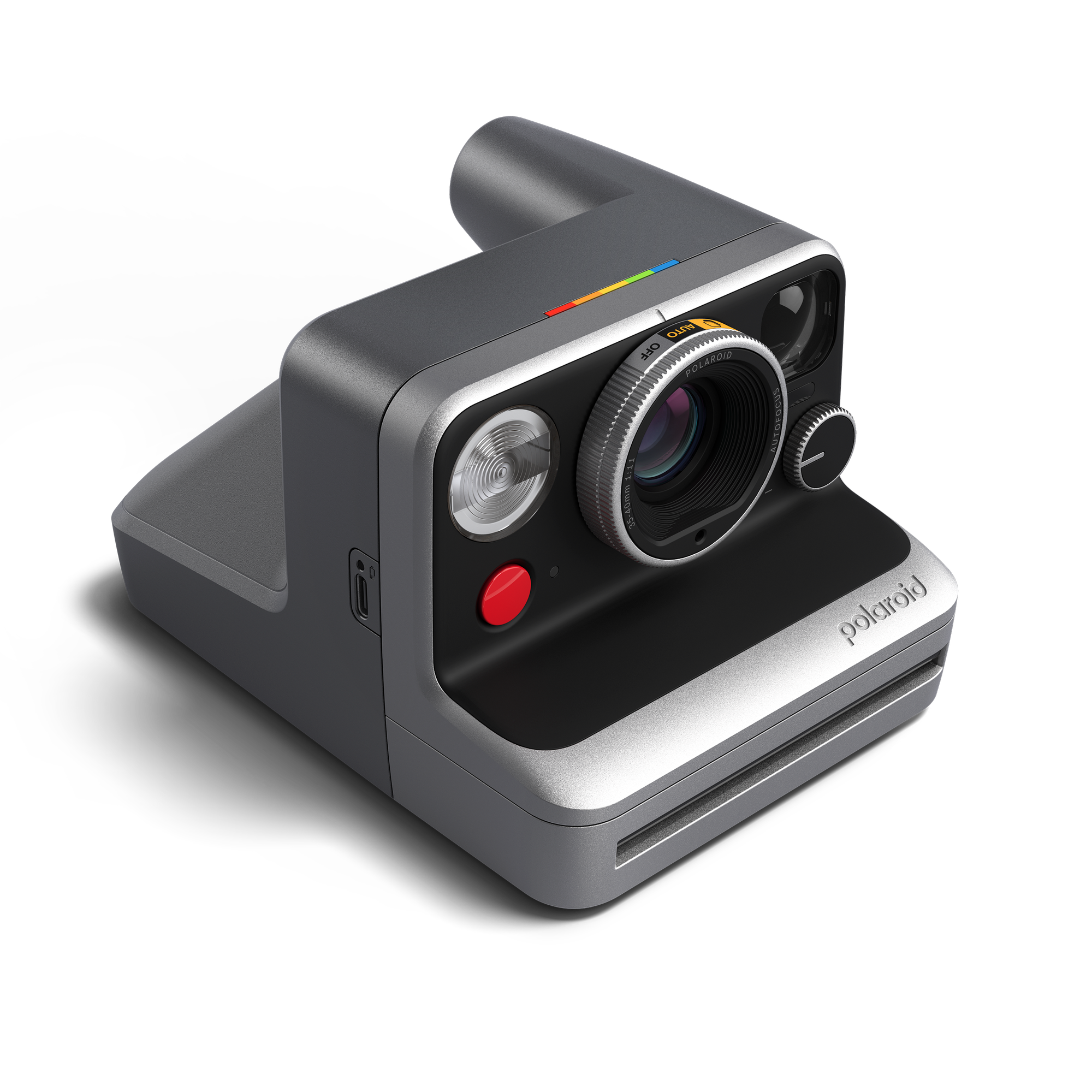
Polaroid announced the Mod on 29 September, an instant camera built around one idea: take techniques that normally require a photographer to understand what the shutter, the flash and the film are doing at the same time, and put each one on a dial position instead. Four modes are built in. Double Exposure layers a second frame over the first. Split Shot uses an included accessory that blocks half the lens, so two separate exposures share one frame. Light Painting opens the shutter for an extended exposure so a moving light source draws a trail across the picture. Motion Freeze fires the flash at the end of a longer exposure, which sharpens a subject against the blur of its own movement. A separate Brightness Dial sets exposure compensation by hand.
The camera takes Polaroid's existing i-Type and 600 film, focuses with two fixed zones rather than continuous autofocus, and charges over USB-C. It ships direct from polaroid.com on the announcement date, reaches select retailers in the US on 6 October, and the rest of the world in early 2027.
Digital Camera World's Hillary K. Grigonis, who shot with the Mod ahead of launch, found the dial genuinely lowered the barrier to techniques she'd otherwise have to talk a beginner through step by step. Her complaints were practical rather than conceptual: the body is too large to pocket, the flash setting resets after every shot instead of holding, and the optical viewfinder's parallax makes the split-shot line hard to place precisely. Film remains the standing cost of instant photography — about $2.25 per exposure at the pack price she quotes.
Polaroid's own pitch for the Mod leans explicitly on what it isn't: marketing copy for the camera describes it as built for photography that rejects "shortcuts and pixel perfection," language aimed squarely at a year when AI-generated images are the thing instant film is being asked to compete with. Whether four dial positions actually teach the underlying techniques, or just automate around them, is a question the camera itself can't answer — that depends on what a photographer does once double exposure stops requiring any thought at all.
Source: Introducing Polaroid Mod
Source: Polaroid Mod review — Digital Camera World
GP